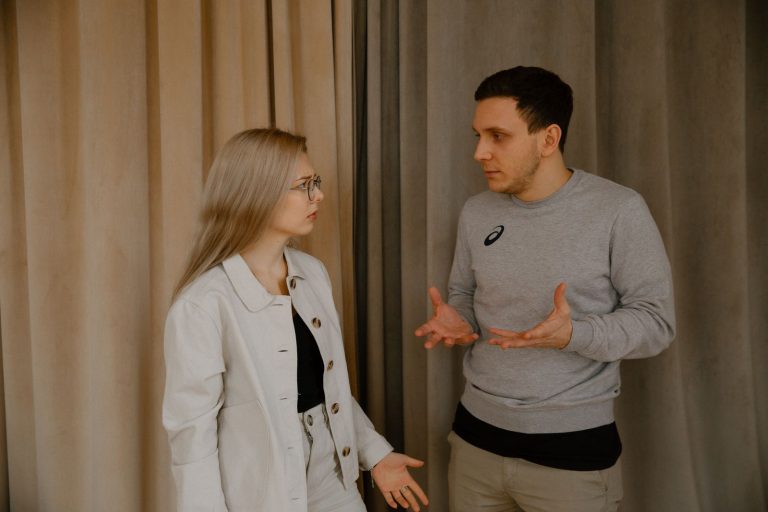
Introvert and Extrovert Marriage: Making Different Social Needs Work
Last updated October 22, 2026 by the Marriage Bliss Editorial Team.
An introvert and extrovert marriage works when both partners treat their different social needs as differences in energy, not signs of a problem: the extrovert recharges around people and activity, the introvert recharges alone or in quiet, and neither is wrong. Couples who thrive agree on a rhythm of time together, time apart and time with others, communicate needs before resentment builds and each stretch a little for the other without losing themselves.
This guide explains common friction points, how each partner often feels, how to set up a balance, scripts for social plans, what to avoid and when a difference in social needs points to something else, such as depression, anxiety or a bigger incompatibility. It’s general information, not therapy. Introversion and extroversion are tendencies on a spectrum, not boxes.
At a glance
- The difference: how people recharge, not whether they like people.
- Common friction: parties, weekends, travel, phone calls, spontaneity, “alone time” and feeling rejected.
- What helps: naming needs, planning a rhythm, flexible compromises, “exit plans” at events and appreciating what each brings.
- Not necessarily a problem: many couples find the contrast balancing.
Is this normal?
Yes. Opposites often attract, and many happy marriages include one partner who loves a crowd and another who prefers a quiet night in. The challenge comes when each reads the other’s needs as criticism: the extrovert hears “you don’t want to be with me,” and the introvert hears “you’re not enough for me” or “something’s wrong with you.” If you recognize this, you’re not alone. See also different goals in marriage.
Common friction points
- Social plans. How many events, how long, who goes.
- Alone time. The introvert needs quiet, and the extrovert may feel shut out.
- Talking. The extrovert may process aloud, while the introvert needs time to think.
- Spontaneity. Last-minute plans vs. predictability.
- Friends and family. Different numbers of people in your lives. See blending holiday traditions.
- Weekends and vacations. Packed itineraries vs. downtime.
- Home life. Hosting, noise and visitors.
- Feeling judged. “Why can’t you be more social?” or “Why do you always want to go out?”
His side, her side
The extrovert: “I get energy from being out with people, and I feel lonely when you say no. I worry that you don’t enjoy my company, and that I’m too much.”
The introvert: “I love you, and I’m drained by constant socializing. I need quiet to feel like myself, and I feel guilty and pressured.”
Both are asking for something reasonable. A good arrangement meets both.
How to make it work: 9 steps
- Talk about needs without blame. “I recharge by being alone. It doesn’t mean I don’t want to be with you.” “I get energy from people. It doesn’t mean you aren’t enough.”
- Understand your own energy. What drains and recharges each of you? Be specific.
- Plan a weekly rhythm. Some time together, some time apart, some social time and some downtime.
- Agree on social plans in advance. A number of events per month, with room to say no.
- Use an “exit plan.” At parties, agree on a signal and a time to leave, with no guilt.
- Split social time. The extrovert can go out with friends on their own, and the introvert can enjoy a quiet evening, without punishment.
- Stretch for each other, within limits. The introvert might join a key event, and the extrovert might choose a quiet date. See couples activities and unique date ideas.
- Communicate before and after. “I’d like to go for two hours, and then I’m ready to come home.” “Thanks for coming. It meant a lot.”
- Appreciate the contrast. The extrovert opens doors, and the introvert deepens connection. Say so.
What to say (and what not to say)
Try:
- “I’d love to go to the party for a couple of hours. Can we leave at 9? Then I’ll have energy to enjoy the weekend with you.”
- “I’m going to see friends on Friday, and I’d love a quiet night with you on Saturday.”
- “Thank you for coming tonight. I know it was a lot, and it meant a great deal.”
Avoid:
- “You’re antisocial.” / “You’re too much.”
- Forcing your partner to match your pace.
- Using alone time to avoid conversation or conflict. See stonewalling in marriage.
- Making your spouse the only source of your social life.
Our guides to listening to your spouse, boundaries in marriage and attachment styles may help. If you both work from home, see working from home with your spouse.
When it’s something else
- Introversion is not depression or anxiety. But persistent withdrawal, loss of interest, or avoidance of people that feels distressing may be. See when your spouse is depressed and living with an anxious spouse.
- Extroversion is not avoidance. If constant activity helps someone avoid intimacy or hard conversations, that’s worth exploring.
When it’s a bigger problem
Seek help if:
- One partner is isolating the other, controlling who they see, or punishing them for socializing or for staying home. That’s not a personality difference. Contact the National Domestic Violence Hotline at 1-800-799-7233 or text START to 88788.
- Either of you feels persistently sad, hopeless or numb. Talk to a doctor or therapist. Call or text 988 in a crisis.
- The difference feels like a deeper mismatch in values or goals, and compromise isn’t working. A counselor can help. See our marriage counselor guide.
This article is general information, not therapy.
Want more on this topic? See our guide to the habits of a happy marriage.
Frequently asked questions
Can an introvert and an extrovert have a happy marriage?
Yes. Many do, especially when they communicate openly about their needs, plan a balance of social and quiet time and appreciate what each brings.
How do I handle social events when my spouse is an introvert?
Plan ahead, agree on how long you’ll stay, use an exit signal, and let each person socialize in their own way, including going separately when needed.
Is my introverted spouse unhappy with me?
Not necessarily. Needing alone time is about recharging, not about how much they care. If you’re worried, ask kindly and listen.