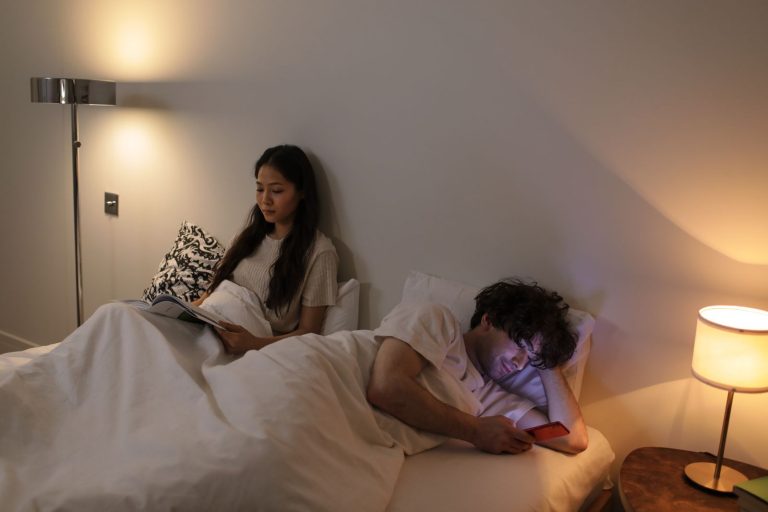
Personal Space in Marriage: How Much Alone Time Is Normal?
Last updated October 26, 2026 by the Marriage Bliss Editorial Team.
A running marriage joke: she uses his razor to shave her legs without a second thought, but the moment he borrows her “leg thing” for his face, it’s World War III. The double standard is the joke, but behind it is a real question about marriage: what’s yours, what’s ours and how much space do each of you get?
Needing personal space in marriage doesn’t mean something is wrong. Most couples need a mix of closeness and independence. Here’s how much alone time is normal, how to ask for it and how to handle the small boundaries, like razors and bathrooms, that cause big arguments.
At a glance
- Wanting space is normal. It’s not rejection.
- Couples differ. Some need an hour a week, others an hour a day.
- Say what you need and when you’ll be back. That keeps it from feeling like withdrawal.
- Small boundaries matter. Razors, towels and bathroom time are worth a conversation.
1. Why personal space matters in marriage
- Recharging. Introverts especially need quiet time to feel like themselves.
- Identity. Hobbies and friendships keep you interesting to each other.
- Less friction. A little distance stops small irritations from building.
- More to share. Time apart gives you something to talk about.
2. How much alone time is normal?
There’s no number. Many couples find a rhythm of a bit of solo time daily (a walk, a shower, a book) and a larger block weekly (a hobby, friends, a workout). The right amount is the amount where both of you feel connected and neither feels abandoned or smothered.
Signs you may need more space: you feel irritable around your spouse, you crave silence or you dread being touched. Signs you may have too much: you feel lonely, you rarely talk or you’re avoiding each other. If the distance is growing, see too comfortable in a relationship.
3. How to ask for space without hurting feelings
- Frame it as recharging, not escaping. “I love you, and I need an hour to reset.”
- Give a return time. “I’ll be back by 8 and I’d love to watch something together.”
- Offer the same in return. “What would help you recharge?”
- Don’t punish with silence. Space is a request, not a protest.
- Protect it. Put it on the calendar like any other plan.
4. The bathroom, the razor and other small boundaries
Small shared things cause surprisingly big arguments. Talk about them once so they stop being surprises:
- Razors and personal care items. Decide what’s shared and what’s not. For hygiene reasons, razors are better kept separate.
- Bathroom time. Stagger mornings, or agree on a quiet period.
- Closet and drawer space. Split it in a way that feels fair.
- Phone and mail privacy. Agree on openness without surveillance.
- A spot that’s yours. A chair, a shelf or a corner of the garage.
And remember the double standard from the joke: if the rule applies to one of you, it applies to both. See different cleanliness standards in marriage for more.
5. When wanting space is a warning sign
- You want space from your spouse and from everything you used to enjoy together.
- Your partner reacts with anger or guilt every time you ask.
- Distance is replacing talking altogether.
If so, talk about it or see a counselor. If you’re worried the relationship is fading, read did I marry the wrong person?.
A sample personal space agreement
You don’t need a formal contract, but a few minutes of talking can prevent months of friction. Use these prompts and write down what you agree on:
- Daily: “What do you need after work before we talk? Ten minutes? A shower? A walk?”
- Weekly: “What’s one block of time you want to protect for yourself?” Put it on the shared calendar.
- Signals: “If I say I need a minute, it means I need a minute, not that I’m angry.” Agree on a phrase you both understand.
- Return time: Always say when you’ll be back, even roughly.
- Shared things: Decide which items are shared and which are not, so nobody gets surprised by a missing razor or a rearranged desk.
Review the agreement every few months. Needs change with kids, jobs and seasons of life.
Special situations
- Small kids at home. Alone time is scarce. Trade shifts: one parent takes the kids Saturday morning while the other gets a few hours, then swap on Sunday.
- Working from home together. If you share a workspace, set boundaries around noise and interruptions, and plan separate lunch breaks.
- Small homes. Create a “door closed” rule or a corner of the room that counts as private, even if it’s a chair with headphones.
- Introvert and extrovert couples. The introvert may need more quiet, the extrovert more company. Plan solo time and social time in alternating weeks. See introvert and extrovert marriage.
- After a loss or stressful season. Some people want closeness and some want solitude. Ask, “Do you want company or space tonight?” and trust the answer.
If your spouse is the one asking for space
Hearing “I need some space” can feel like rejection. It usually isn’t. How to respond without making it harder:
- Believe the words. “I need an hour” means they need an hour, not that something is wrong with you.
- Don’t ask for a full explanation. A short “Thanks for telling me. I’ll see you at 8” is enough.
- Use the time well. Call a friend, go for a walk or take your own recharge.
- Say how you feel afterward, calmly. “When you went quiet last week, I felt a little shut out. Can we agree on a way to say it?”
- Watch for patterns. If space requests are constant and always paired with distance, that’s worth a gentle conversation.
What this looks like in real life
A composite example: after a loud week, one spouse snaps at the other over nothing. Later, they admit what happened: “I haven’t had a minute to myself in days, and I took it out on you.” The fix wasn’t a long talk. It was a Saturday morning where one of them took a long walk alone and came back, as they put it, “like a person.”
Another version: a husband who loves his workshop felt guilty every time he went out there, and his wife felt abandoned. They talked, agreed on Thursday evenings and Saturday mornings, and she took the same time for her own book club. Both said the marriage improved, even though they were physically together less.
The bigger life lesson: closeness needs room
We often picture a good marriage as two people who do everything together. In reality, the strongest couples tend to be people who stay whole individuals. A few things worth remembering:
- You can’t give from an empty cup. Alone time isn’t selfish; it refills the patience and humor you bring home.
- Needing space isn’t a verdict on your spouse. It’s about your energy, not their worth. Saying so out loud prevents a lot of hurt.
- Nobody can be everything for another person. Friends, hobbies and quiet are part of a healthy life. Expecting your spouse to fill every need is a heavy burden on them and on you.
- Trust makes space safe. Couples who trust each other don’t panic when the other goes out for an evening. Building that trust is worth the effort.
- Return matters as much as leaving. Time apart works best when you come back warm and curious, ready to share.
Love isn’t two people squeezed into one life. It’s two whole people choosing to share one.
Five questions to talk about tonight
- When do you feel most in need of some time to yourself?
- What do you do with solo time that makes you feel like yourself again?
- Is there a time when my asking for space made you feel shut out?
- What helps you feel connected to me even when we’re apart?
- What boundaries around our home, our stuff and our time would make life easier?
Answer these kindly and without correcting each other. Your answers are likely to be different, and that’s the point.
Want more on this topic? See our guide to marriage communication and conflict.
Frequently asked questions
Is it normal to need alone time in marriage?
Yes. Healthy couples balance togetherness with independence.
How do I tell my spouse I need space?
Say it warmly, explain it’s about recharging, and tell them when you’ll be back.
Should married couples share a razor?
It’s better not to. Razors can carry bacteria and cause nicks and irritation. Keep separate ones.
Is it normal to want time away from my spouse?
Yes. Wanting some time alone is common and healthy. It becomes a concern when you want to avoid your spouse altogether or when your time apart is replacing talking and connection.
How do I ask for space without hurting my spouse?
Tell them what you need and when you’ll be back, and make clear it’s about recharging, not rejecting them. Offering the same time in return shows you care about their needs too.
The bottom line
Space doesn’t mean distance. A little room for both of you, and a razor each, makes closeness easier.
This article offers general information, not professional advice.