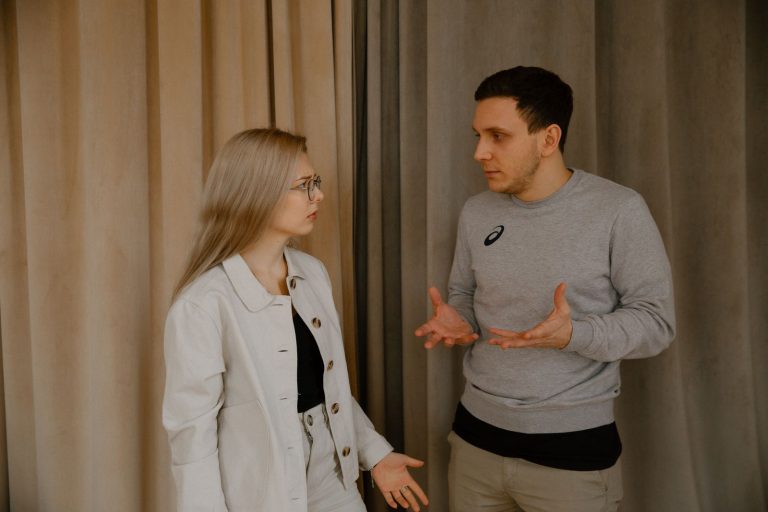
Did I Marry the Wrong Person? Why Doubts Happen (Even Over Butter)
Last updated October 23, 2026 by the Marriage Bliss Editorial Team.
“When he picks up salted butter instead of unsalted from the store, and you start to question if he’s really ‘the one.'”
Marriage Memes
We’ve all been there. One wrong stick of butter, one sock next to the hamper, one “what do you mean we’re out of milk, I was just at the store,” and a little voice asks: did I marry the wrong person?
Here’s the honest answer up front. Almost everyone who’s been married a while has asked that question at least once, and asking it doesn’t mean you married the wrong person. Most of the time it means you’re tired, stuck in a rut or holding on to a fight you never finished. The question deserves a real answer, though, because sometimes the doubt is pointing at something worth fixing, and once in a while it’s pointing at something you shouldn’t ignore. This guide helps you tell the difference.
At a glance
- Doubts are normal. Questioning your marriage in a hard season is common and doesn’t predict divorce on its own.
- Small annoyances get big when you’re running on empty. Stress, sleep loss and resentment make every butter mistake feel like evidence.
- “The one” is a myth that sets marriages up to fail. No one is a perfect fit; good marriages are built, not found.
- Look at patterns, not moments. One bad week says little. Months of contempt, loneliness or fear say a lot.
- Safety comes first. If the doubt is really fear of your partner, that’s a different situation (see section 7).
1. Why the butter makes you question everything
Nobody actually reconsiders their marriage over dairy. What happens is that a tiny mistake lands on top of a pile you were already carrying: the dishes, the calendar, the feeling that you’re the only one who remembers anything. The butter isn’t the problem; it’s the last straw on a camel that’s been loaded for weeks.
Psychologists sometimes describe this as negative sentiment override. When you feel generally good about your partner, you filter their mistakes kindly (“he grabbed the wrong one, no big deal”). When you’ve been feeling distant or resentful, the same mistake gets filed as proof (“he never listens, he doesn’t care”). The behavior didn’t change. Your filter did.
That’s useful to know, because it means the fix often isn’t a different spouse. It’s a different filter, and filters can be reset.
2. Is it normal to doubt your marriage?
Yes. Doubts tend to cluster around predictable pressure points: the first year or two, when the honeymoon glow wears off; the arrival of kids; job loss or money stress; a move; caring for aging parents; and the stretch when kids leave home. Each of these changes how much time, energy and attention you have for each other.
Another reason doubts creep in is hedonic adaptation, our habit of getting used to good things. The kindness that dazzled you while dating becomes background. You stop noticing that he always fills your gas tank, but you definitely notice the salted butter.
So the doubt itself isn’t a verdict. It’s a signal to look more closely at what’s going on, in you, in your partner and in the space between you.
3. The “the one” myth
A lot of marriage doubt comes from a story many of us absorbed growing up: that somewhere out there is one perfect person who will understand us without explanation, never annoy us and make love feel effortless forever. Measured against that, any real spouse looks like the wrong person.
The writer Alain de Botton made this point in a widely shared essay, arguing that in some sense we all marry the “wrong” person, because nobody can fit our idealized picture, and we ourselves are harder to live with than we realize. His conclusion wasn’t to give up on marriage. It was to swap the fantasy of the perfect match for the more realistic goal of two flawed people who are good at tolerating and repairing their differences.
A more useful question than “is this the one?” is: “Can we keep learning to be good to each other?”
4. Signs it’s a rough patch, not the wrong person
Doubts usually point to a fixable rough patch when most of these are true:
- You still like your partner when you’re not stressed, like on vacation or after a good night’s sleep.
- You can remember why you chose them, and some of those qualities are still there.
- Your fights are about chores, money, time or in-laws rather than about who you each are as people.
- Either of you can still make a repair attempt (a joke, an apology, a hand on the shoulder) and the other sometimes accepts it.
- You share core values on the big things: kids, honesty, how you treat people.
- The doubt grew during a hard stretch, such as a new baby, illness or a brutal season at work.
If that list sounds familiar, the next section is where to put your energy.
5. Signs the doubt deserves a closer look
Some doubts point to something more serious. Pay attention if:
- Contempt has moved in. Eye-rolling, mocking and disgust (from either of you) are more damaging than ordinary fights.
- You feel lonely together for months, not days, and attempts to reconnect keep going nowhere.
- Your values or life goals have split, for example on having children, faith or where to live, and neither of you can bend.
- There’s been betrayal that hasn’t been honestly addressed.
- You’ve stopped caring whether things get better. Indifference is often a bigger warning sign than anger.
None of these automatically means the marriage is over. Many couples come back from exactly these places. But they’re signs that wishing won’t fix it, and you’ll likely need a real conversation and outside help. Our guide to questions to ask yourself before deciding on divorce can help you sort out what you’re feeling.
6. What to do when you’re doubting your marriage
Start with yourself (one week)
Before deciding anything about your marriage, check your own tank. Are you sleeping? Depressed? Burned out at work? Doubt about a marriage and doubt about your whole life can feel identical from the inside. If you’ve felt low for more than a couple of weeks, talk to your doctor or a therapist; treating depression or anxiety sometimes changes how the marriage looks.
Reset the filter (two to three weeks)
- Keep a “caught you being good” list. Each day, note one thing your spouse did right. You’re not pretending problems don’t exist; you’re correcting a filter that only records mistakes.
- Turn toward small bids. When your partner shares something, even something minor, respond with interest instead of a phone glance.
- Add one moment of fun. A walk, a show you both like, a silly in-joke. Couples who only manage logistics together start to feel like roommates. (If that’s you, see we only talk about logistics.)
Say it out loud, kindly
If the doubt doesn’t lift, it’s time to tell your partner what you’re feeling, framed as a shared problem rather than a verdict. Our guide on how to tell your spouse you’re unhappy walks through how to start.
Get a neutral third person
A good couples counselor can help you both see patterns you can’t see from inside. If one of you is leaning out and the other wants to stay, discernment counseling is designed for exactly that split. Our guide to finding a marriage counselor explains what to look for.
7. When it’s a bigger problem
Sometimes “did I marry the wrong person?” is really “am I safe?” If your partner hits, threatens, controls your money or phone, isolates you from friends and family, or makes you afraid to disagree, that isn’t a compatibility issue, and it isn’t something couples counseling is meant to fix. Contact the National Domestic Violence Hotline at 1-800-799-7233 or text START to 88788 for confidential help planning your next steps. In an emergency, call 911.
If your doubts come with hopelessness or thoughts of harming yourself, call or text 988 (the Suicide & Crisis Lifeline) any time.
8. What to say (and what not to say)
Try:
- “I’ve been feeling distant from you lately, and I miss us. Can we talk about it this weekend?”
- “I’ve noticed I’m getting irritated over little things, and I don’t think it’s really about the little things.”
- “I want us to be good again. Would you be open to seeing a counselor with me?”
Avoid:
- “I think I married the wrong person.” Said in a fight, this is almost impossible to take back.
- “You always…” or “You never…” Absolutes start arguments instead of conversations.
- Comparing your partner to an ex, a friend’s spouse or anyone’s highlight reel on social media.
Bonus: the actual butter question
Since the meme started this: salted versus unsalted butter mostly matters for baking. Many recipes call for unsalted butter so you can control the total salt in the dish. For toast, cooking and most everyday uses, either one works fine. If a recipe calls for unsalted and you only have salted, many bakers simply reduce the added salt a little.
The marriage version of that tip: write the brand and type on the shopping list. It’s a lot cheaper than an existential crisis.
Want more on this topic? Visit our guide to a marriage in trouble, or read why couples fight over small things.
Frequently asked questions
How do I know if I married the wrong person?
Look at patterns over months rather than moments. Ongoing contempt, deep loneliness, broken trust that never gets addressed, incompatible life goals or fear of your partner are serious signs. Ordinary irritation, boredom or a rough season after a big life change usually aren’t.
Is it normal to have doubts after getting married?
Yes. Many people have doubts in the first years of marriage and during big transitions like having a baby. Doubts are a signal to pay attention and talk, not proof that you made a mistake.
Can you fall back in love with your spouse?
Often, yes. Feelings follow attention and shared experiences, so couples who start turning toward each other, having fun again and fixing recurring fights frequently find that warmth returns. A counselor can help if you’re stuck.
The bottom line
A wrong stick of butter won’t end a marriage, but the feeling behind that eye-roll is worth listening to. Most doubts point to a tired filter, a fight that needs finishing or a couple that needs more fun. Reset what you can, talk honestly, and get help if you’re stuck. And if the doubt is really about fear, reach out for safety support first.
Marriage Bliss offers general information, not therapy, medical or legal advice. If you’re in danger, call 911.