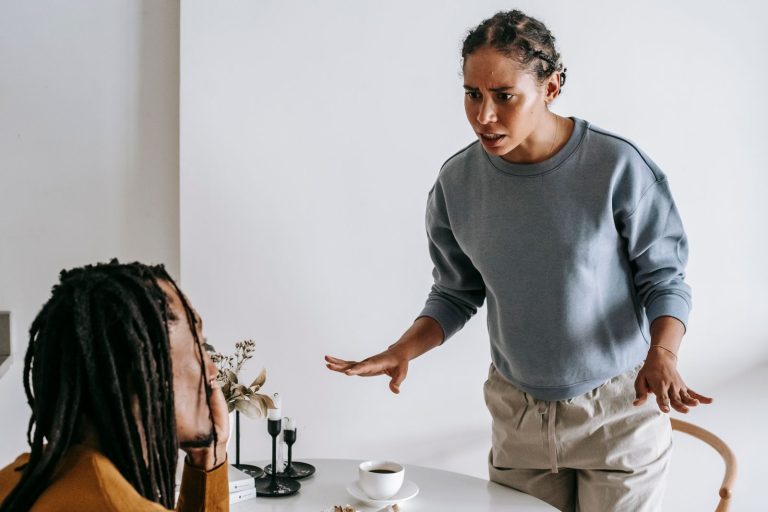
Emotionally Unavailable Husband? How Men Can Express Emotions (and How to Help)
Last updated October 29, 2026 by the Marriage Bliss Editorial Team.
Many wives say their husband is a good man but emotionally unavailable: he shuts down, deflects with jokes, or says “I’m fine” when he clearly isn’t. Many men want to connect but were never taught how to express emotions. The good news is that it’s a skill, and it can be learned at any age.
This guide is for both of you: husbands who want to get better at expressing feelings, and wives who want to help their husband open up.
Why many men struggle to express emotions
- Growing up hearing “boys don’t cry” or “man up”
- Few role models who talked about feelings
- Fear of looking weak or being judged
- Not having words for what they feel
- Past conversations that turned into fights
- Depression, which in men often shows up as irritability or withdrawal
Signs of an emotionally unavailable husband
- Avoids deep conversations
- Changes the subject or jokes when things get serious
- Withdraws during conflict
- Rarely shares worries or fears
- Seems present physically but distant emotionally
For husbands: how to express emotions
- Start by naming one feeling a day. Stressed, frustrated, proud, worried, grateful.
- Use simple sentences: “I’m stressed about work,” “That hurt my feelings.”
- Notice your body: tight shoulders or a clenched jaw often signal emotions.
- Talk while doing something: walking or driving can feel easier.
- Write it down if talking feels hard at first.
- Consider therapy. It’s a training ground for emotional skills, not a sign of weakness.
Many men also find it helps to understand what’s behind anger. See anger management for husbands.
For wives: how to get your husband to open up
- Make it safe: respond to what he shares with calm and appreciation, not criticism.
- Lower the pressure: avoid “We need to talk.”
- Try side-by-side conversations on walks or drives.
- Ask simple questions: “What was the most stressful part of your day?”
- Notice how he shows love through actions.
- Be patient: change happens slowly.
A simple feelings vocabulary for men
Many men default to “fine,” “tired” or “annoyed.” Having a few more words makes it easier to say what’s really going on:
- Instead of “fine”: content, relaxed, relieved, hopeful.
- Instead of “tired”: drained, overwhelmed, stretched thin, burned out.
- Instead of “annoyed”: disrespected, ignored, embarrassed, let down, hurt.
- Instead of “stressed”: worried, under pressure, scared of failing, uncertain.
Anger is often a cover for something underneath, like hurt, fear or shame. Naming the feeling underneath usually leads to a better conversation.
Sentence starters for husbands
- “Today I felt ___ when ___.”
- “I’m worried about ___, and I don’t know what to do yet.”
- “I didn’t say it at the time, but I felt ___.”
- “I need ___ from you right now.”
- “I’m proud of ___.”
Her side, his side
Her side: “I want to know the real him: his worries, his hopes. Instead I get the weather report.”
His side: “When I’ve opened up before, it turned into a long discussion or advice I didn’t want. It’s easier to say I’m fine.”
When she listens without fixing and he shares a little at a time, both get what they want.
Emotional availability and intimacy
Emotional closeness and physical closeness are linked for many couples. A husband who shares more often finds his wife feels closer and more connected in other ways too. See intimacy ideas for married couples and when couples only talk about logistics.
More: when your partner won’t open up and how to communicate with your husband.
If your husband seems persistently down, irritable or withdrawn, he may be dealing with depression. Read when your spouse is depressed. In a crisis, call or text 988.
Want more on this topic? See our guide to marriage communication and conflict.
Frequently asked questions
Why is my husband emotionally unavailable?
Often because of how he was raised, fear of judgment, not having words for feelings, or depression.
Can an emotionally unavailable man change?
Yes, if he wants to. Practice, a safe partner, and therapy can help a lot.
How do I get my husband to share his feelings?
Make it safe and low-pressure, ask simple questions, talk side by side, and respond kindly when he opens up.
The bottom line
An emotionally unavailable husband isn’t necessarily an uncaring one. Expressing emotions is a skill, and men can learn it at any age with practice, a safe partner and sometimes a therapist. Start small: one feeling, one honest sentence, one kind response.
This article offers general information, not professional advice.