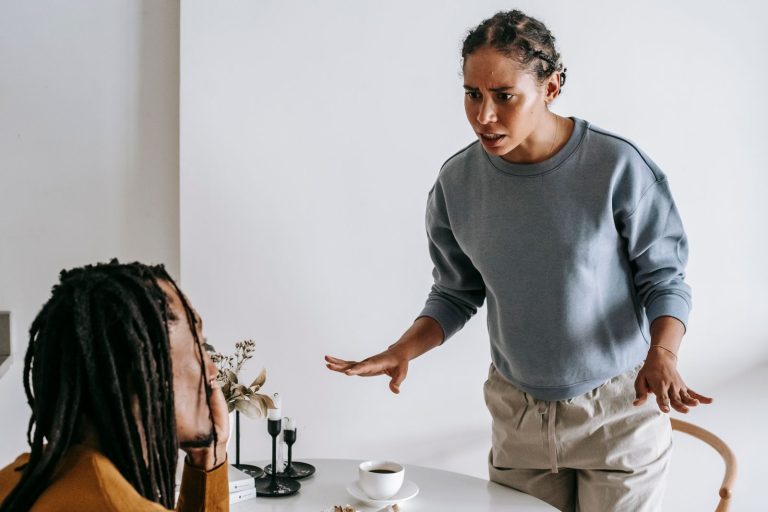
Partner Brings Up the Past in Every Fight? How to Stop Re-Fighting Old Battles
Last updated October 22, 2026 by the Marriage Bliss Editorial Team.
If your partner brings up the past in every fight, the usual reason is simple: an old hurt never fully healed. When something painful wasn’t truly repaired (with understanding, an apology and changed behavior), it tends to resurface whenever a new conflict feels similar. Stopping the cycle means doing two things: keeping current arguments about the current issue, and giving the old wound the proper repair it never got.
This isn’t about one person being petty or the other being careless. Both people usually feel stuck: one feels they’re never allowed to move on, the other feels the hurt was never taken seriously.
At a glance
- Old issues resurface when they weren’t resolved, only paused.
- Bringing up the past often signals “I still don’t feel safe about this.”
- In the moment: agree to stay on one topic per conversation.
- Separately: schedule a calm talk to properly address the old hurt.
- Repair takes three parts: understanding, a real apology and consistent change.
- Forgiveness is a process, not a one-time announcement.
Is it normal for a spouse to keep bringing up old mistakes?
It’s very common, especially after a serious breach of trust, a hurtful comment that was never acknowledged, or a pattern that keeps repeating. Most people do it sometimes. It becomes a problem when it happens in nearly every argument, when the same story is used as a weapon, or when it makes it impossible to resolve anything new.
1. Why your partner brings up the past
- The hurt was never repaired. Maybe there was a quick “sorry” but no real understanding, or the behavior kept happening.
- The new fight feels like the old one. Late again, forgetting again, siding with your family again: the present triggers the past.
- They don’t feel heard. Repeating the old example is a way of saying, “This is a pattern, and you’re not seeing it.”
- Self-protection. Keeping the memory alive can feel like insurance against getting hurt again.
- Losing the argument. Sometimes people reach for old ammunition when they feel cornered.
- Unprocessed betrayal. After infidelity or deception, intrusive memories and triggers are common for a long time.
2. Why it keeps fights from ending
When one argument pulls in five old ones, there’s no clear problem to solve. The person being accused gets defensive about events they can’t change, the person raising them feels dismissed again, and the original issue (say, a missed dinner) never gets sorted out. Over time, both people start dreading conflict, and resentment piles up. Our rules for fighting fair include staying on one topic for exactly this reason.
3. His side, her side
The partner raising the past might feel: “I’m not trying to punish you. I bring it up because it still hurts, and every time something similar happens, it feels like nothing has changed. You never really understood how much that hurt me.”
The partner hearing it might feel: “I apologized. I’ve tried to change. If every fight goes back to that, how can we ever move forward? It feels like I’ll be on trial forever.”
Both are often true at the same time. The way out is to acknowledge the hurt fully and to agree on what would let it finally rest.
4. How to stop bringing up the past in arguments
- Agree on one topic per conversation. If the past comes up, either of you can say, “That matters. Let’s set a time to talk about it separately. Right now, can we stick to tonight?”
- Schedule the old conversation. Choose a calm time (not during or right after a fight) to address the old hurt directly.
- The hurt partner explains the impact, not just the event: what it meant, what it still triggers, what they need now.
- The other partner listens and reflects back without defending: “So when I did that, you felt like you couldn’t count on me, and when I’m late now, it brings that back.”
- Offer a real apology. Not “sorry if you were upset,” but “I’m sorry I did that. I see how it hurt you.” See when a spouse never apologizes for what makes apologies land.
- Agree on what change looks like, and follow through consistently.
- Decide together how you’ll handle triggers. For example, the hurt partner can say, “I’m getting triggered about the old thing,” instead of using it as a weapon.
5. What to say (and what not to say)
If you’re the one bringing up the past, try:
- “I know this fight is about tonight, but it’s bringing back how I felt when ___. Can we talk about that another time?”
- “I don’t think we ever really finished talking about ___. Can we set aside time this weekend?”
If your partner keeps raising it, try:
- “I can hear that still hurts. I don’t want to brush it off. Can we talk about it properly when we’re both calm?”
- “I want us to get past this. What would help you feel like it’s really been dealt with?”
Avoid:
- “Here we go again.”
- “That was years ago. Get over it.”
- “You always…” or “You never…” lists of past failures.
- Bringing up the past only to win the current argument.
6. Forgiveness: what it is and isn’t
Forgiveness doesn’t mean pretending something didn’t happen or that it was okay. It means choosing, over time, to stop holding the debt against your partner. It’s usually easier when the other person has acknowledged the hurt and changed. It can take a while, especially after a serious betrayal, and it’s fine for it to happen gradually. Our guide to forgiveness in marriage walks through the steps on both sides.
A helpful question for the hurt partner: “What would I need to see or hear to feel this is finished?” A helpful question for the other partner: “Have I really shown, consistently, that I understand and have changed?”
7. A simple “past issue” agreement
Some couples find it useful to write a short agreement after they’ve properly talked an old issue through:
- What happened, in a sentence you both accept.
- What it meant to the hurt partner.
- The apology that was given.
- What will be different going forward.
- How you’ll check in on it (for example, monthly for the next three months).
- How the hurt partner will raise it if they’re triggered, without using it in a fight.
It may feel formal, but naming that the issue has been addressed gives both of you permission to stop re-fighting it, and a clear path if it comes up again.
If you’re the one who brings up the past
It’s worth looking honestly at your own side, too. Ask yourself:
- Have I clearly told my partner what still hurts and what I need, outside of a fight?
- Has my partner actually changed, even if the memory still stings?
- Am I raising it to be understood, or to win?
- Would a counselor or trusted friend help me process the old hurt?
Holding on to an old injury is often a form of self-protection. Letting it go doesn’t mean it didn’t matter. It means you’ve decided the relationship you’re building now deserves a fair chance. If you can’t get there on your own, that’s a sign the hurt needs more care, not that you’re failing.
8. When it’s a bigger problem
- The past being raised involves an affair or serious betrayal that hasn’t been worked through. Specialized support helps; see how to get over infidelity.
- Old grievances are used constantly to belittle, control or punish.
- Either of you can’t stop replaying memories, or experiences panic, flashbacks or intense distress. A therapist can help with this.
- Every attempt to resolve the past ends in a bigger fight.
A licensed couples counselor can help you finish old conversations safely. If arguments ever include threats, intimidation or fear, contact the National Domestic Violence Hotline at 1-800-799-7233 (or text START to 88788). If anyone is in crisis, call or text 988.
Want more on this topic? See our guide to marriage communication and conflict.
Frequently asked questions
Why does my partner keep bringing up the past?
Usually because an old hurt wasn’t fully repaired, or because a new situation feels similar and triggers it again. Sometimes it’s used to win an argument, which is worth naming gently.
Is bringing up the past in an argument toxic?
Occasionally referencing a pattern isn’t toxic. Repeatedly using old mistakes as weapons to shame or control is harmful and keeps couples stuck.
How do you move on from past mistakes in a relationship?
Talk about the old hurt properly when calm, offer a real apology, agree on what will change, follow through consistently, and give forgiveness time to develop.
The bottom line
When a partner brings up the past in every fight, the past is asking for attention. Keep today’s argument about today, then give the old hurt a proper conversation, a real apology and consistent change. Once it’s truly repaired, most couples find it stops showing up uninvited.
This article offers general information, not professional advice. For ongoing conflict or unresolved betrayal, consider a licensed couples counselor.