How Your Childhood Affects Your Marriage (and What to Do About It)
Last updated October 21, 2026 by the Marriage Bliss Editorial Team.
Your childhood affects your marriage by shaping your expectations of love, how you handle conflict, and what feels “normal” in a relationship. The family you grew up in taught you, often without words, whether it was safe to express feelings, how money and anger were handled, and what to expect from the people closest to you. Those lessons show up in your marriage, sometimes as strengths and sometimes as reactions that seem out of proportion. The good news: once you understand the patterns, you and your spouse can choose different ones.
At a glance
- Your family of origin sets your default “relationship blueprint.”
- Past trauma can show up as strong reactions to present-day triggers.
- Patterns often appear in conflict, affection, money, and parenting.
- Awareness, honest conversation, and sometimes therapy help couples change them.
1. How your childhood shapes the way you love
Your model of conflict
If your parents yelled, you may either yell too or avoid conflict at all costs. If they never argued in front of you, you might feel that any disagreement means the marriage is in trouble. Neither reaction is wrong; both are learned. Our article on whether arguing is healthy may help reset expectations.
Your comfort with closeness
Children whose caregivers were reliably warm tend to grow up expecting closeness to be safe. If caregivers were inconsistent, you may cling when you feel distance. If they were dismissive, you may pull away when things get emotional. These attachment patterns are well studied and often show up strongly in marriage.
Your sense of roles
Who cooked? Who handled money? Who apologized? Many couples clash over chores or finances because each partner assumes their family’s way was simply “the way.” See dividing chores in marriage and managing money in marriage.
2. Past trauma and marriage
Experiences like neglect, divorce, addiction in the home, or abuse can leave lasting effects on how safe a person feels in close relationships. In marriage, these effects may look like:
- Strong reactions to raised voices, closed doors, or silence.
- Difficulty trusting, even when your spouse has done nothing wrong.
- Shutting down or “going numb” during conflict.
- Feeling responsible for everyone’s feelings.
- Discomfort with physical or emotional intimacy.
These reactions made sense at the time; they were ways of coping. In a safe marriage they can become obstacles. Healing usually involves both individual work and a patient, informed partner.
3. Signs your past is showing up in your marriage
- Your reaction feels much bigger than the situation.
- You hear a parent’s voice when you criticize your spouse.
- You keep having the same fight, even when the topic changes.
- Your spouse says, “I’m not your father/mother.”
- You notice you married someone who reminds you of a parent, for better or worse.
4. What to do about it as a couple
Get curious, not defensive
When a reaction feels outsized, ask yourself: “When have I felt this before?” Often the answer points to something old.
Share your story
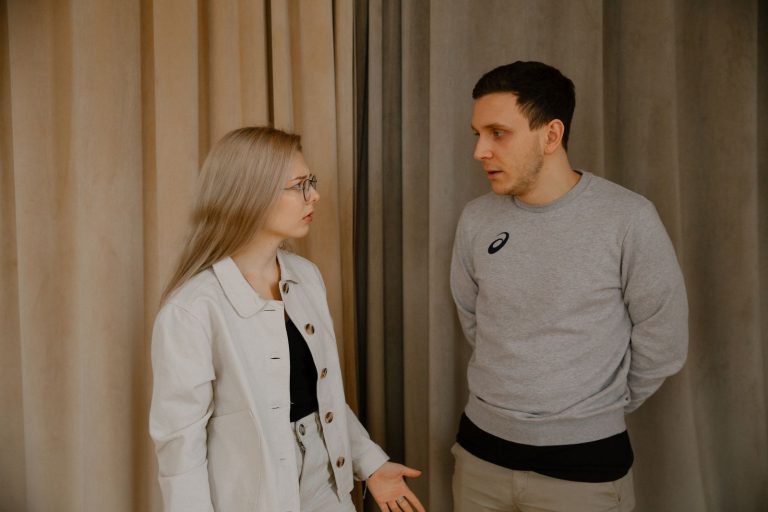
Telling your spouse about your family, including the hard parts, helps them understand your reactions and respond with more compassion. Agree to listen without trying to fix or judge.
Name triggers and agree on responses
For example: “When you go silent, it reminds me of my mom’s cold shoulder. Can you tell me you need a break instead?” Clear agreements reduce misunderstandings. Our guide to the silent treatment covers this.
Choose the traditions you want to keep
Not everything from childhood is a problem. Decide together which family habits you love and want to carry forward, and which you want to retire.
Set boundaries with family when needed
Old dynamics can resurface around parents and siblings. See dealing with in-laws and boundaries in marriage.
5. When to get professional help
If trauma is causing panic, flashbacks, depression, or ongoing conflict, a licensed therapist can help. Trauma-informed approaches such as EMDR and Emotionally Focused Therapy are common options. Our guide to finding a counselor explains where to start.
If you’re in crisis or having thoughts of suicide, call or text 988 (Suicide & Crisis Lifeline) any time.
Related: attachment styles in marriage.
Frequently asked questions
Does childhood trauma affect marriage?
Often, yes. It can affect trust, intimacy, and how you handle conflict. With awareness, a supportive spouse, and often therapy, many people build secure, loving marriages despite difficult childhoods.
Do we marry people like our parents?
Many people are drawn to partners who feel familiar, which can mean similarities to a parent. Familiar isn’t always healthy, so it helps to notice the patterns.
How do I stop repeating my parents’ mistakes in my marriage?
Identify the specific patterns you want to avoid, talk about them openly with your spouse, practice new responses, and get support from a therapist if you keep falling back into old habits.