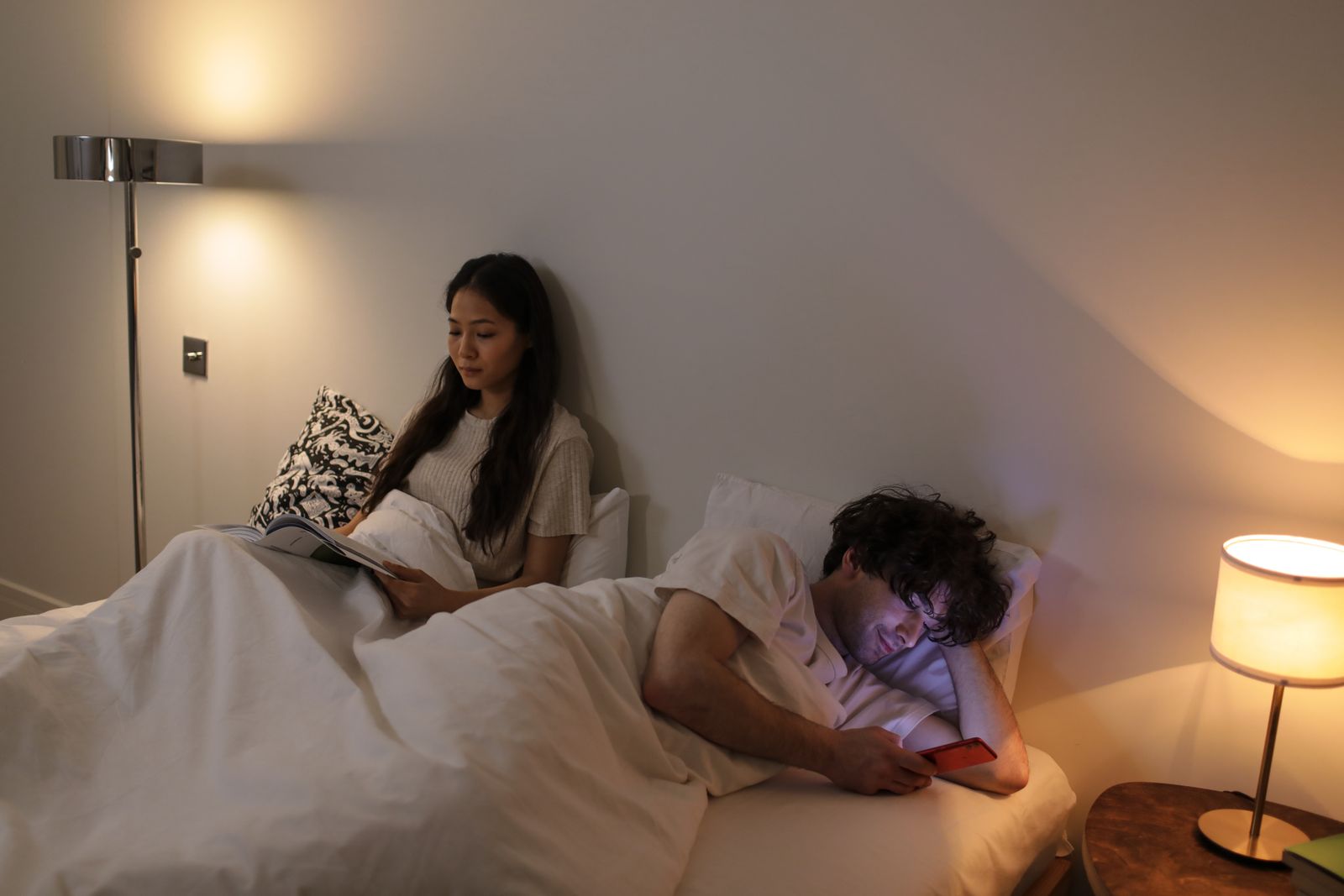
Night Owl and Early Bird: Different Sleep Schedules in Marriage
Last updated October 26, 2026 by the Marriage Bliss Editorial Team.
Here’s a scene many couples know: one spouse is asleep by nine, snoring softly. The other is wide awake at midnight, scrolling through videos of cats with the volume down and a guilty grin. The next morning, one is chirpy at six and the other is not.
Different sleep schedules in marriage are common, and they’re not a sign of a bad relationship. Chronotypes (whether you’re a morning or night person) are partly biological. Here’s how a night owl and an early bird can share a bed and a life without losing sleep or closeness.
At a glance
- Chronotypes are partly inherited. Neither of you is being difficult on purpose.
- Protect sleep first. Poor sleep makes everything harder.
- Protect connection second. Pick a time that works for both of you.
- Build a shared window. Even 20 minutes counts.
- Consider separate sleep setups if needed. It can protect the relationship.
1. Why different sleep schedules cause friction
- Noise and light. A late-night phone or an early alarm can wake the sleeper.
- Lost couple time. The evening hours disappear for one of you.
- Intimacy. Different energy levels at night can make intimacy harder to line up.
- Resentment. “Why can’t you just come to bed?” and “Why are you up so early?” turn into judgments.
- Parenting. Night shifts and early wake-ups add to the load. See the default parent.
2. How to make it work
- Stop treating it as a flaw. It’s biology, not a character issue.
- Make a shared wind-down. Spend 20 to 30 minutes together before the earlier sleeper goes to bed.
- Make the bedroom friendly to both. Eye masks, blackout curtains, white noise, a phone on silent with headphones.
- Go to bed together sometimes. A couple of nights a week can be enough.
- Trade mornings and nights. The night owl takes the late chores, the early bird takes early ones.
- Use the quiet time well. Night owls get hobby time, early birds get a peaceful morning.
- Plan intimacy deliberately. Afternoons, weekends or mornings may work better than “when we’re both awake.” See physical touch.
3. Should we sleep in separate beds?
Many couples sleep apart some or all nights and say it improves their sleep and relationship. It isn’t a sign of trouble if you agree on it and stay close in other ways: cuddle time before sleep, shared mornings, regular touch and conversation. If it feels like a rejection, talk about it openly.
4. When sleep is a medical issue
Loud snoring, gasping, restless legs or chronic insomnia can be sleep disorders, not just preferences. If your sleep is regularly poor, talk to a doctor.
5. Keep the connection
- Have a “good night” and “good morning” ritual.
- Schedule one regular date at a time that suits you both. See date night ideas for parents.
- Avoid big talks when one of you is exhausted.
If the schedule difference reflects growing distance, see too comfortable in a relationship.
A sample schedule for an owl and a lark
Here is what a workable day might look like. Adjust the times to your lives:
- 6:00 a.m. The early bird gets up quietly (clothes laid out the night before, phone on vibrate) and enjoys a peaceful hour.
- 7:00 a.m. Both share a quick moment in the morning, even five minutes with coffee. The owl may need to be gently awake for it, so keep it short and kind.
- Evening: Dinner together at a time that works for both.
- 9:00 p.m. A 20-minute wind-down together on the couch: a show, a chat, a cuddle.
- 9:30 p.m. The early bird goes to bed. The owl uses the evening for hobbies, chores or quiet time, then slips in with the lights off and phone silent.
- Weekends: Pick one morning to sleep in together and one evening to stay up together.
Special situations
- Shift work. If one of you works nights, protect shared time as you would an appointment: a standing meal together, a text at the same time each day, one day off in common.
- New baby. Sleep schedules are anyone’s guess. Split nights so each of you gets a long stretch of sleep, and check in about it daily.
- Snoring or restless sleepers. Try separate bedtimes, a white noise machine, or earplugs before deciding on separate rooms. If snoring is loud or involves gasping, see a doctor.
- Travel and time zones. After a flight, schedule a short “re-sync” evening where you both stay up a little and talk.
- Older couples. Sleep patterns shift with age. Talk openly about changes instead of assuming they signal less closeness.
If you’re the one who goes to bed first (or last)
Each side has things to do to make this fair.
- The early sleeper: Try not to treat the late partner as irresponsible, and make the shared time you do have count. Let them know it’s fine to come to bed late if they keep it quiet.
- The late sleeper: Keep the room dark and quiet when you come in, and avoid scrolling in bed. Take your turn making mornings gentle too.
- Both: Say “I miss you” instead of “why are you still up?” or “why are you in bed already?”
What this looks like in real life
A composite example: a couple argued for years about bedtime. She went to bed at nine; he stayed up till one. Each felt judged. They eventually agreed on a simple deal: dinner together, twenty minutes on the couch, then she goes to bed and he reads in another room until he’s sleepy. On Saturdays they stay up late together and sleep in. The sleep schedule never changed. The arguing stopped.
The bigger life lesson: accept how your partner is wired
Sleep is a small thing that reveals a big one: how you handle differences you can’t change. Some thoughts to take with you:
- Not every difference is a problem to fix. Some are just traits to plan around. Trying to change a night owl into a morning person is rarely successful and often hurtful.
- Compassion works better than correction. “How can we make this work for both of us?” opens a conversation. “Why can’t you just go to sleep?” closes one.
- Protect health as part of love. Good sleep supports mood, patience and kindness. Looking after each other’s rest is a practical way to care.
- Intimacy is made, not found. Closeness at odd hours won’t happen on its own. Choosing a time on purpose shows how much it matters.
- Flexibility is a skill. Learning to bend around each other’s rhythms is good practice for every harder difference in a long marriage.
The aim isn’t synchronized clocks. It’s a shared life that has room for two natural rhythms.
Five questions to talk about tonight
- When do you feel most awake and most like yourself during the day?
- What makes it hardest for you to fall asleep or wake up?
- Is there any part of our different schedules that makes you feel lonely?
- What small change to the bedroom or the evening would help you rest better?
- When would you most like to spend time together, and how do we protect it?
Ask them during the day, not at 11 p.m. when one of you is exhausted.
Want more on this topic? See our guide to marriage communication and conflict.
Frequently asked questions
Is it OK for spouses to go to bed at different times?
Yes. Many happy couples do, as long as they find other times to connect.
How do a night owl and an early bird stay connected?
With a shared wind-down, a few shared bedtimes and regular dates at times that suit both.
Do couples who sleep apart have a worse marriage?
Not necessarily. Better sleep often improves mood and closeness. What matters is the agreement and the connection elsewhere.
Can a night owl and a morning person stay in love?
Absolutely. Plenty of couples do. The key is a shared window for connection, respect for each other’s natural rhythm and a bedroom setup that lets both of you sleep.
How do we keep intimacy alive with different schedules?
Plan it. Weekend mornings, afternoons or a date night can work better than waiting for the same moment of energy. A little scheduling doesn’t make it less romantic.
The bottom line
You don’t need to sleep on the same clock. You need a place on the clock where you meet.
This article offers general information, not professional or medical advice.